

Every few years, a technology boom arrives that creates spectacular winners and equally spectacular losers. The 1990s internet gold rush made Cisco a trillion-dollar company and wiped out hundreds of dot-coms. The smartphone wave turned TSMC (Taiwan Semiconductor Manufacturing Company — the world's leading contract chip manufacturer) and Qualcomm into behemoths while burying dozens of handset makers. AI infrastructure investing is the 2026 version of that same question: where do the reliable returns actually live?
The answer, increasingly, is in the physical layer — the chips, the cables, the buildings, and the power grid that every AI application on earth depends on. You don't need to understand how a neural network learns to see why those inputs matter. When Amazon, Google, Microsoft, Meta, and Oracle collectively commit more than $720 billion in capital expenditure for a single year, the companies supplying concrete, copper, cooling water, and computing silicon are going to do very well regardless of which chatbot wins the AI wars.
This article maps the entire AI infrastructure supply chain in plain English, explains the five main ways retail investors can participate at different risk levels, and gives you a practical five-question framework for evaluating any individual stock in this space. No semiconductor physics required.
Why AI Infrastructure Is a $720 Billion Opportunity in 2026
Quick Answer: The five largest cloud computing companies have committed record capital expenditure to build out AI infrastructure in 2026 — a level of spending that is contracted, visible, and dwarfs previous technology buildouts. For investors, this means the demand side of the equation is unusually predictable.
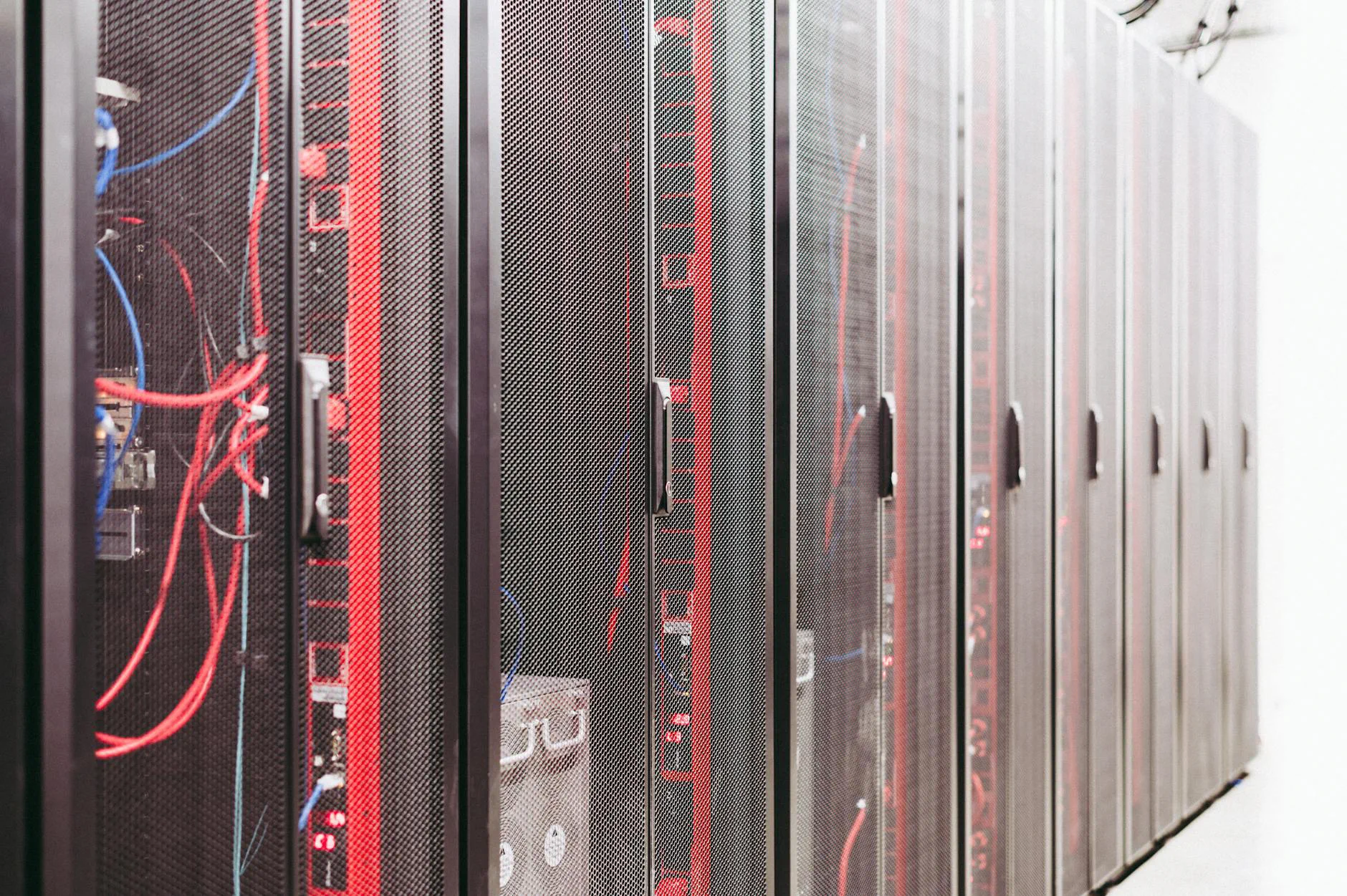
The Hyperscaler Spending Commitment
In early 2026, TechCrunch published a breakdown of announced hyperscaler capex that stopped many analysts mid-sentence: Amazon had committed $105 billion, Microsoft $80 billion, Google $75 billion, Meta $65 billion, and Oracle had pledged a further $40 billion through its data center expansion program. That's well over $360 billion from five companies — and it doesn't include the cascade of investment flowing to their suppliers. The infrastructure buildout serving these commitments pushes the total AI infrastructure investment figure above $720 billion for the year alone.
What makes this number meaningful for investors isn't just its size — it's its visibility. Unlike software revenue, which can evaporate overnight when a competitor ships a better product, data center construction requires signed leases, ordered equipment, and utility contracts that lock in spending years in advance. McKinsey & Company projects that global data center spending will reach $6.7 trillion through 2030. That's not a forecast of what might happen if AI succeeds — it's largely a count of what is already happening based on contracts in place today.
Why Infrastructure Beats Software for Predictability
The distinction matters because most retail investors instinctively reach for AI software stocks — OpenAI competitors, AI-powered SaaS tools, generative AI platforms. Those can deliver extraordinary returns, but they require you to correctly identify the winner in a market where competitive dynamics shift every six months. Infrastructure is different. A data center REIT (Real Estate Investment Trust — a company that owns income-producing real estate) like Equinix doesn't care whether its tenants are running GPT-5 or a competitor's model. An electricity utility doesn't care which chatbot is consuming its power. These companies get paid regardless of who wins the AI software race.
"The five major hyperscalers have committed over $720 billion in AI infrastructure capex for 2026 alone — a level of contracted spending that makes this buildout fundamentally different from the speculative dot-com era." — TechCrunch, February 2026
- Look up the most recent annual reports for two hyperscalers (Amazon, Google, or Microsoft) and note their stated capex for data centers and AI infrastructure.
- Compare their capex-to-revenue ratio over the past three years — notice how dramatically it has increased since 2023.
The AI Infrastructure Supply Chain (In Plain English)
Quick Answer: The AI infrastructure supply chain has four layers — chips (the brains), networking (the nervous system), data centers (the buildings), and power and cooling (life support). Each layer contains distinct investment opportunities with different risk profiles.
Before picking any individual stocks, it helps to visualize the AI economy the same way you'd visualize a city. A city needs brains (its people and computers), communication networks (phones and internet), buildings (offices and homes), and utilities (electricity and water). Remove any one of those layers, and the city stops working. The AI infrastructure stack is identical in its interdependence — and equally rich in investment opportunities at each level.
Layer 1 — The Chips (Brains)

A GPU (Graphics Processing Unit) is a chip that can do thousands of calculations simultaneously — originally designed for rendering video game graphics, now repurposed to train and run AI models. NVIDIA holds roughly 80% of the AI GPU market, and its H100, H200, and Blackwell chip families are the primary compute fabric of every major AI model in deployment today. That concentration is extraordinary by any historical standard and helps explain why NVIDIA's market capitalization crossed $3 trillion in 2025.
The custom chip story is the one to watch for long-term investors. Google builds its own TPUs (Tensor Processing Units — chips optimized specifically for AI workloads), Amazon designs Trainium chips for its own data centers, and Microsoft has developed the Maia accelerator. These custom designs reduce hyperscaler dependence on NVIDIA over time — which creates a risk for pure NVIDIA investors but also creates opportunities in the companies further up the supply chain, particularly TSMC (which manufactures chips for Apple, NVIDIA, AMD, and virtually every custom silicon project simultaneously) and ASML (the Dutch company that makes the lithography machines used to print chips — a genuine global monopoly).
Layer 2 — The Networking (Nervous System)

Training a large AI model isn't something one chip does in isolation. It requires thousands of GPUs exchanging data with each other at extraordinary speeds — sometimes transferring hundreds of terabytes per second. The networking layer makes that possible. NVIDIA's InfiniBand (a high-bandwidth networking protocol designed for parallel computing) dominates high-performance AI clusters, which is a significant but often overlooked contributor to NVIDIA's total revenue beyond chips alone.
The more interesting competitive battleground for investors is Ethernet. Traditional Ethernet networking — the standard you use at home — has been improving rapidly, and companies like Broadcom, Arista Networks, and Marvell Technology are pushing high-speed Ethernet as a less expensive alternative to InfiniBand. Arista, in particular, has become a critical supplier to Microsoft and Meta for AI networking buildouts. This "networking civil war" between proprietary InfiniBand and open Ethernet is one of the most consequential structural debates in the AI infrastructure space, and its outcome will determine billions in annual revenue for these companies.
Layer 3 — The Data Centers (The Buildings)

A data center is, at its most fundamental, a very large, very secure building full of computers. But calling it a building the way you'd call a warehouse a building is like calling an aircraft carrier a boat — technically accurate, wildly underselling the complexity. A hyperscale AI data center costs $1–3 billion to build, requires specialized power infrastructure (backup generators, uninterruptible power supplies, redundant utility feeds), needs precise environmental controls, and demands physical security comparable to a government facility. These aren't projects you improvise.
For investors, the most accessible data center exposure comes through REITs. Equinix (EQIX) and Digital Realty (DLR) are the two largest publicly traded data center REITs and operate the neutral colocation (co-lo) facilities that tech companies lease instead of building their own. Iron Mountain (IRM), better known for physical document storage, has pivoted aggressively into data center construction and now generates a growing share of revenue from AI infrastructure leases. These companies earn predictable, long-term contracted revenue — Equinix's average lease length exceeds five years — which gives them a fundamentally different risk profile than a pure-play semiconductor stock.
Layer 4 — The Power & Cooling (Life Support)

This is the layer most investors don't think about — and arguably the most interesting one right now. A single modern AI data center can consume 100–500 megawatts of power, enough electricity to supply a city of 80,000 homes. The International Energy Agency estimated in late 2025 that data centers already consume roughly 1% of global electricity, with projections reaching 3–4% by 2030 as AI workloads intensify. That's a staggering demand curve landing on a power grid that hasn't been substantially upgraded in decades.
The bottleneck has created a genuine opportunity in energy infrastructure. Constellation Energy (CEG) and Vistra Corp (VST) — both nuclear power operators — have signed long-term power purchase agreements directly with hyperscalers who need carbon-free, always-on electricity that solar and wind can't guarantee. Microsoft's deal with Constellation to restart the Three Mile Island nuclear plant is the most prominent example, but it's not the last. Cooling technology is the other overlooked angle: traditional air cooling can't handle the heat density of the latest GPU clusters, creating demand for liquid cooling solutions from companies like Vertiv Holdings (VRT) and Eaton Corporation (ETN).
- Map the AI supply chain with four columns on a piece of paper: Chips / Networking / Data Centers / Power. Try to name two publicly traded companies in each column from memory, then verify them with a quick search.
- Look up the current stock price and one-year performance of Equinix (EQIX) and Vertiv (VRT) — two infrastructure plays that rarely show up in mainstream AI stock coverage.
Five Ways to Invest in AI Infrastructure (From Low Risk to High)
Quick Answer: AI infrastructure investing ranges from low-effort diversified ETFs to targeted individual stock positions. The five main entry points differ in risk, concentration, and required research — here's the spectrum laid out simply.

Important note: The examples below are educational illustrations, not financial advice or recommendations to buy specific securities. Always conduct your own due diligence and consult a licensed financial advisor before making investment decisions.
| Investment Type | Risk Level | Best For | Example Names |
|---|---|---|---|
| Broad AI Infrastructure ETFs | Low–Medium | Beginners, passive investors wanting diversified exposure | BOTZ, WTAI, ROBT, SRVR |
| Data Center REITs | Low–Medium | Income-oriented investors; those who want contracted revenue | Equinix (EQIX), Digital Realty (DLR), Iron Mountain (IRM) |
| Utility & Energy Stocks | Low–Medium | Conservative investors; "boring but brilliant" power plays | Constellation Energy (CEG), Vistra (VST), NextEra (NEE) |
| Semiconductor & Networking | Medium–High | Growth-focused investors comfortable with valuation volatility | NVIDIA (NVDA), Broadcom (AVGO), Arista (ANET), TSMC (TSM) |
| Niche Infrastructure Plays | High | Experienced investors who have done deep sector research | Vertiv (VRT), Micron (MU), Marvell (MRVL), ASML (ASML) |
1. Broad AI Infrastructure ETFs — The Diversified Entry Point
An ETF (Exchange-Traded Fund — a basket of stocks that trades like a single share) is the most efficient way for most retail investors to enter this space. Rather than betting on which chip maker wins, a broad AI infrastructure ETF distributes your capital across dozens of companies simultaneously. The tradeoff is that you also own the underperformers in the basket, and ETF fees (typically 0.5–0.75% annually for AI-themed funds) compound over time. For investors with less than $10,000 to allocate or those who don't want to monitor individual earnings reports, ETFs are the right starting point.
2. Data Center REITs — Real Estate with a Technology Premium
Data center REITs are the closest thing in the AI infrastructure space to a classic real estate income investment. They own the buildings, lease them to technology tenants on multi-year contracts, and distribute a mandated percentage of their income as dividends. Equinix, the world's largest data center REIT, operates over 260 data centers across 33 countries and has grown revenue consistently for over a decade. The risk is that large hyperscalers increasingly prefer to own their own data centers rather than lease — reducing the addressable market for REITs over the very long term. For now, demand still far outstrips the supply of co-location space.
3. Utility & Energy Stocks — The "Boring but Brilliant" Play
Nuclear power operators had a forgettable decade before AI data centers started signing multi-gigawatt power purchase agreements. Constellation Energy's stock rose more than 90% in 2024 alone as investors realized that nuclear — with its 24/7 availability and zero carbon emissions — is uniquely positioned to supply AI data centers that can't rely on intermittent solar or wind. The investment thesis is simple: AI increases electricity demand, nuclear provides the most reliable carbon-free base load, and the handful of nuclear operators are the only companies with permitted, operating capacity to sell. Vistra Corp, the largest competitive power generation company in the United States, tells a similar story.
4. Semiconductor & Networking Stocks — Direct Buildout Exposure
NVIDIA, AMD, Broadcom, Marvell, and TSMC are the most direct expression of AI infrastructure spending in the public markets. NVIDIA's data center revenue — its GPU sales to cloud providers and enterprises — exceeded $90 billion annualized in early 2026. Broadcom earns substantial revenue from AI-specific networking chips and is the primary beneficiary of Google's custom TPU program. These stocks carry higher valuations and greater earnings volatility than REITs or utilities, but they are the clearest direct bets on the volume of AI compute being deployed.
5. Niche Infrastructure Plays — The Specialist Layer
Vertiv designs and manufactures thermal management and power delivery systems for data centers — the cooling and power distribution equipment that prevents billion-dollar GPU clusters from overheating. As GPU density per rack increases from 10kW to 100kW and beyond, Vertiv's liquid cooling products transition from optional upgrade to essential infrastructure. Micron and SK Hynix supply HBM (High Bandwidth Memory — a stacked chip architecture that sits alongside GPUs to dramatically increase data transfer speeds), a segment with near-duopolistic pricing power. These names require more research than buying an ETF, but they also address specific technical bottlenecks that are unlikely to disappear.
- Decide which investment category matches your risk tolerance and research capacity. Write down your choice and one reason for it.
- If you chose ETFs, look up the current holdings of BOTZ and WTAI and compare the top 10 positions in each — they overlap more than you'd expect, which matters for diversification.
- If you're drawn to individual stocks, pick one company from the table above and find its most recent earnings transcript.
How to Evaluate an AI Infrastructure Stock (A Simple 5-Question Framework)
Quick Answer: Before buying any AI infrastructure stock, run it through five questions: Is revenue contracted? Is growth funded by earnings or debt? Does the company own a near-monopoly niche? Can it survive a 30% spending slowdown? And is the valuation reasonable for its growth trajectory?

KKR's November 2025 "Beyond the Bubble" research note offered one of the clearest frameworks for separating durable AI infrastructure investments from speculative ones: focus on contracted revenue, capital structure discipline, and niche defensibility. Fidelity's February 2026 "Is AI a Bubble? 5 Signs to Watch" report echoed similar themes. We've distilled the core of both into a practical five-question checklist that any retail investor can apply without a Bloomberg terminal.
Question 1: Does the Company Have Contracted Revenue?
Equinix's leases run five to seven years. TSMC's advanced node capacity is booked years in advance. Constellation Energy has power purchase agreements that lock in demand through the 2030s. Contracted revenue means the business has visible, predictable cash flows regardless of quarterly sentiment. Contrast that with CoreWeave — the GPU cloud startup that IPO'd in 2025 with heavy speculative demand and significant debt — which relies on hyperscaler customer concentration and lacks the long-term revenue visibility of mature infrastructure operators. The more contracted the revenue, the more defensive the stock.
Question 2: Is Growth Funded by Earnings or Debt?
Infrastructure buildouts require massive upfront capital. The question is who's funding it. TSMC funds its expansion primarily from its extraordinary free cash flow — over $20 billion annually — which means it doesn't need capital markets to cooperate. Highly leveraged companies that depend on cheap debt to fund their buildout face refinancing risk if rates stay elevated, and their equity becomes correlated with credit market conditions rather than just AI demand. Check the balance sheet: a debt-to-equity ratio above 2x in an infrastructure company warrants scrutiny about where the growth capital is coming from.
Question 3: Is the Company a Monopoly or Near-Monopoly in Its Niche?
NVIDIA holds roughly 80% of the AI GPU market. ASML holds 100% of the market for extreme ultraviolet (EUV) lithography machines needed to print the most advanced chips — literally every advanced chip on earth requires one of their machines. Equinix operates in 33 countries with network effects so strong that tenants rarely leave once connected. These moats don't guarantee stock performance, but they do mean a company has pricing power and structural demand durability that a competitive commodity supplier does not.
Question 4: What Happens If AI Spending Slows by 30%?
This is the stress test question. If a major recession hit or AI investment sentiment soured, which parts of your portfolio would still generate meaningful revenue? Data center REITs would continue collecting rent on long-term leases. Nuclear utilities would still sell electricity under power purchase agreements. GPU vendors would see order volumes fall sharply. Custom AI chip startups with no diversification outside the AI hyperscaler customer base would face existential risk. Run every position through this scenario mentally before sizing it.
Question 5: Is the Valuation Reasonable Given the Growth Trajectory?
This is where honest self-assessment matters. NVIDIA trading at 35x forward earnings is only "reasonable" if it sustains 40%+ revenue growth for multiple years. Data center REITs trading at 25x FFO (Funds From Operations — the REIT equivalent of earnings) are reasonable if they can grow FFO at 8–12% annually through lease renewals and new construction. The danger zone is paying a high-growth software multiple for a business that will eventually exhibit utility-like growth — or paying utility-like multiples for a business that actually faces significant competitive disruption. Know what you're buying and what the implied growth rate of the valuation assumes.
"Focus on contracted revenue, capital structure discipline, and niche defensibility. The companies that built the internet's infrastructure — Equinix, TSMC, fiber providers — are still generating returns today. The speculative names are footnotes." — Adapted from KKR "Beyond the Bubble," November 2025
- Pick one AI infrastructure stock you're considering and answer all five questions using publicly available information (10-K filing, investor day presentation, earnings transcript).
- Pay particular attention to Question 4 — actually estimate the company's revenue impact from a 30% capex slowdown by hyperscalers.
Risks Every AI Infrastructure Investor Should Understand
Quick Answer: The four primary risks are a potential AI investment bubble (analogous to but different from the dot-com era), extreme hyperscaler concentration, technology disruption from more efficient AI models, and regulatory and energy constraints that could slow or redirect the buildout.
The Bubble Question — And Where the Analogy Breaks Down
The comparison to the dot-com bubble is the most common concern investors raise, and it deserves a serious answer rather than dismissal. In 1999–2000, internet infrastructure spending was also justified by explosive demand projections — and a significant portion of the fiber optic cables and server farms built in that era sat unused for years afterward. A February 2026 NBER (National Bureau of Economic Research) study on AI firm productivity found that the productivity gains from AI adoption, while real, were concentrated in specific task categories and had not yet translated to economy-wide productivity improvements at the scale that would justify the aggregate investment.
Where the analogy breaks down is in the nature of the buyers. Dot-com infrastructure was often funded by companies that had no revenue and no durable business model, running on venture capital. Today's AI infrastructure capex is being committed by Amazon, Google, and Microsoft — companies with combined 2025 revenues exceeding $1 trillion and operating cash flows that fund their buildouts without needing capital markets. A Bank of America credit investor survey from early 2026 showed that credit spreads for hyperscaler paper remain near historical lows, reflecting the market's assessment that these are well-capitalized companies making strategic investments, not speculative ones. That doesn't make every related stock cheap — but it does mean the demand side of the infrastructure equation is unlikely to collapse suddenly.
Concentration Risk and Technology Disruption
Five companies — Amazon, Google, Microsoft, Meta, and Oracle — account for the majority of AI infrastructure spending. If any two or three of them significantly reduce their buildout, the downstream effects on chip demand, real estate leasing, and networking equipment orders would be severe. This concentration is the single greatest systemic risk in the sector, and it's worth sizing positions accordingly.
Technology disruption is the second risk, and it cuts in a less obvious direction than most people expect. The emergence of more efficient AI models — DeepSeek's January 2025 demonstration that a smaller model could approach GPT-4 level performance at a fraction of the training cost was the most prominent example — could reduce the GPU count required for a given level of AI capability. If that efficiency trend accelerates, today's massive GPU clusters might be overkill, and the companies supplying those GPUs would face demand headwinds. The counter-argument, widely held in the industry, is that efficiency gains historically increase total AI usage rather than reducing infrastructure spend — the so-called Jevons Paradox applied to compute. Both outcomes are plausible, and disciplined investors should hold the tension between them.
- Read the most recent earnings call transcripts for Amazon AWS and Google Cloud — specifically how they describe their AI infrastructure commitments and whether those commitments are "pull-forward" or "incremental" to prior plans.
- Review our deep dive on risks and regulation of AI in finance for a broader view of where oversight frameworks are heading.
Frequently Asked Questions
What is AI infrastructure investing?
AI infrastructure investing means buying shares in the companies that build and maintain the physical and digital backbone of artificial intelligence — chips, data centers, networking equipment, and energy systems — rather than betting on individual AI software products. It's the picks-and-shovels approach applied to the AI boom: you profit regardless of which specific AI application or model wins, because every competitor needs the same underlying infrastructure.
What are the best AI infrastructure ETFs for beginners?
Broad options include the Global X Robotics & AI ETF (BOTZ), WisdomTree Artificial Intelligence & Innovation Fund (WTAI), and the First Trust Nasdaq AI & Robotics ETF (ROBT). For infrastructure-specific exposure including data centers and utilities, consider the Pacer Data & Infrastructure Real Estate ETF (SRVR) or GRID (First Trust NASDAQ Clean Edge Smart Grid). Always check current fund holdings before investing, as ETF compositions change. These are examples for educational purposes, not investment recommendations.
Is it too late to invest in AI infrastructure in 2026?
The five major hyperscalers have committed over $720 billion in capital expenditure for 2026 alone, and McKinsey projects $6.7 trillion in data center investment through 2030. While early-stage gains in semiconductor stocks are largely behind us, the infrastructure buildout is still in its middle innings — particularly in power, cooling, and data center real estate, where valuations have not yet reached the levels seen in semiconductor names. That said, no investment timeline is guaranteed, and all positions carry risk.
What's the difference between investing in AI and investing in AI infrastructure?
Investing in AI typically means owning companies that build or use AI software products — chatbots, generative AI platforms, AI-powered SaaS tools. Investing in AI infrastructure means owning the companies that supply the hardware and physical resources every AI company needs: chip manufacturers, data center operators, power providers, and networking equipment makers. Infrastructure tends to be less speculative because demand is contracted years in advance, and the customers are cash-rich hyperscalers rather than early-stage startups.
How much of my portfolio should be in AI infrastructure?
This depends entirely on your risk tolerance, investment timeline, and existing portfolio composition. Many financial advisors suggest limiting any single sector theme to 5–15% of a diversified portfolio. AI infrastructure ETFs provide broad exposure with lower concentration risk than individual stocks. This article is educational and does not constitute financial advice — please consult a licensed financial advisor for personal guidance tailored to your circumstances.
Are AI infrastructure stocks overvalued?
Semiconductor companies like NVIDIA trade at elevated forward P/E multiples that price in continued explosive revenue growth. By contrast, data center REITs and utility stocks with AI exposure often trade at more moderate valuations relative to their contracted revenue growth — though both have re-rated significantly since 2023. The honest answer is that valuation depends heavily on which part of the infrastructure stack you're examining. The table in the Five Ways to Invest section provides a starting framework for comparing risk levels.
Can I invest in AI infrastructure with $500 or less?
Yes. Fractional share investing on platforms like Fidelity, Schwab, or Robinhood lets you buy partial shares of high-priced stocks. More practically, a single share of a broad AI infrastructure ETF can give you diversified exposure across dozens of companies for a low entry price. ETFs are typically the most efficient way for small investors to access this sector without needing to choose among individual companies.
What are picks and shovels stocks?
The term comes from the California Gold Rush — the merchants who sold picks, shovels, and supplies to miners often made more reliable profits than the miners themselves, because they profited regardless of which miner struck gold. In investing, picks-and-shovels stocks are the infrastructure suppliers to a booming industry. In the AI era, that means chip makers, data center operators, and energy providers — not the individual AI software companies competing for the final consumer.
Do I need to understand AI technology to invest in AI infrastructure?
No — and that's the central insight of this entire article. You don't need to pick the winning AI model or understand how neural networks learn. You need to understand which companies provide the irreplaceable physical inputs that every AI application requires: processing power, network bandwidth, real estate, and energy. Those relationships are more stable and predictable than software competition, and the investment thesis doesn't require technical expertise to evaluate — just the five-question framework in this article.
aicourses.com Verdict
Quick Answer: AI infrastructure investing is one of the most compelling long-term structural themes available to retail investors — provided you invest in the right layers at the right valuations and understand the concentration risks that underpin the entire buildout.
The picks-and-shovels framework isn't new — but its application to AI is particularly compelling because the buildout is so capital-intensive, the buyers are so creditworthy, and the infrastructure timeline stretches so far into the future. A data center built today will still be generating lease revenue in 2040. A nuclear power plant restarted to serve AI demand has a 40-year operating license. These are not speculative bets on which chatbot wins next year — they are long-duration assets in genuine secular demand growth. Pricing and stock data verified as of March 2026. Individual stock valuations change frequently; re-verify before acting on specific figures.
Our practical advice: start with the supply chain map, not with tickers. Understand which of the four infrastructure layers you actually want exposure to, match it to your risk tolerance using the investment type table, and then run any individual stock through the five-question framework before sizing a position. The companies that built the internet's infrastructure — Equinix, TSMC, fiber providers — are still generating returns twenty years later. The durable AI infrastructure plays are likely to look similar in retrospect. This article contains stock examples that should be re-verified periodically as company circumstances change.
The next article in this cluster maps the AI supply chain visually for investors who want to go deeper on each layer — check our AI Investing section for the full series as it publishes. For related reading available now, explore AI ETFs & AI-Focused Stocks to Know for a broader survey of the investable universe, Risks & Regulation of AI in Finance for a detailed treatment of the policy landscape, and our Can AI Predict the Stock Market? analysis for a clear-eyed look at what AI investing tools can and cannot actually do. Want to learn more about AI? Download our aicourses.com app through this link and claim your free trial!
Sources
- TechCrunch (February 2026): Hyperscaler capital expenditure data and $720B AI infrastructure commitment
- McKinsey & Company: $6.7 trillion global data center spending forecast through 2030
- Fidelity (February 2026): "Is AI a Bubble? 5 Signs to Watch"
- KKR (November 2025): "Beyond the Bubble: Why AI Infrastructure Will Compound"
- BlackRock (2026): AI Infrastructure and Listed Infrastructure Insights
- NBER (February 2026): Study on AI Firm Productivity Impact
- International Energy Agency: Data Center Electricity Consumption 2025–2030